Look at the cylinder, the part the key goes into, where it sits in the door handle. If it sticks out past the handle, or you cannot see any anti-snap branding, it is likely a standard cylinder that can be snapped in under a minute. The fix is a tested anti-snap cylinder such as an ABS Master, which resists snapping and is backed by a guarantee.
Short answer: Look at the cylinder, the part the key goes into, where it sits in the door handle. If it sticks out past the handle, or you cannot see any anti-snap branding, it is likely a standard cylinder that can be snapped in under a minute. The fix is a tested anti-snap cylinder such as an ABS Master, which resists snapping and is backed by a guarantee.
Most people picture a burglar picking a lock like a film safecracker. In reality, the most common way intruders beat a uPVC or composite front door is far cruder and far faster: they snap the cylinder. It takes seconds, needs no skill, and the tools are sold openly online. The good news is that you can check your own vulnerability in about two minutes. I fit anti-snap locks across the West Midlands regularly, and in Halesowen in particular I find the same pattern repeating on doorstep after doorstep, so the guidance below is drawn from what I actually see rather than from a brochure.
What lock snapping actually is
A euro cylinder is the brass barrel your key turns. A standard one has a weak point near the centre. An intruder grips the part that protrudes from the handle, levers it sharply, and the cylinder snaps in two, exposing the mechanism so the door can be opened. A poor-quality cylinder offers almost no resistance.
The 2-minute test
Go to your front door and check three things:
- Does the cylinder stick out?Look side-on at the handle. If the cylinder protrudes more than a couple of millimetres past the handle escutcheon, there is something to grip and lever. A flush-fitted cylinder is much harder to attack.
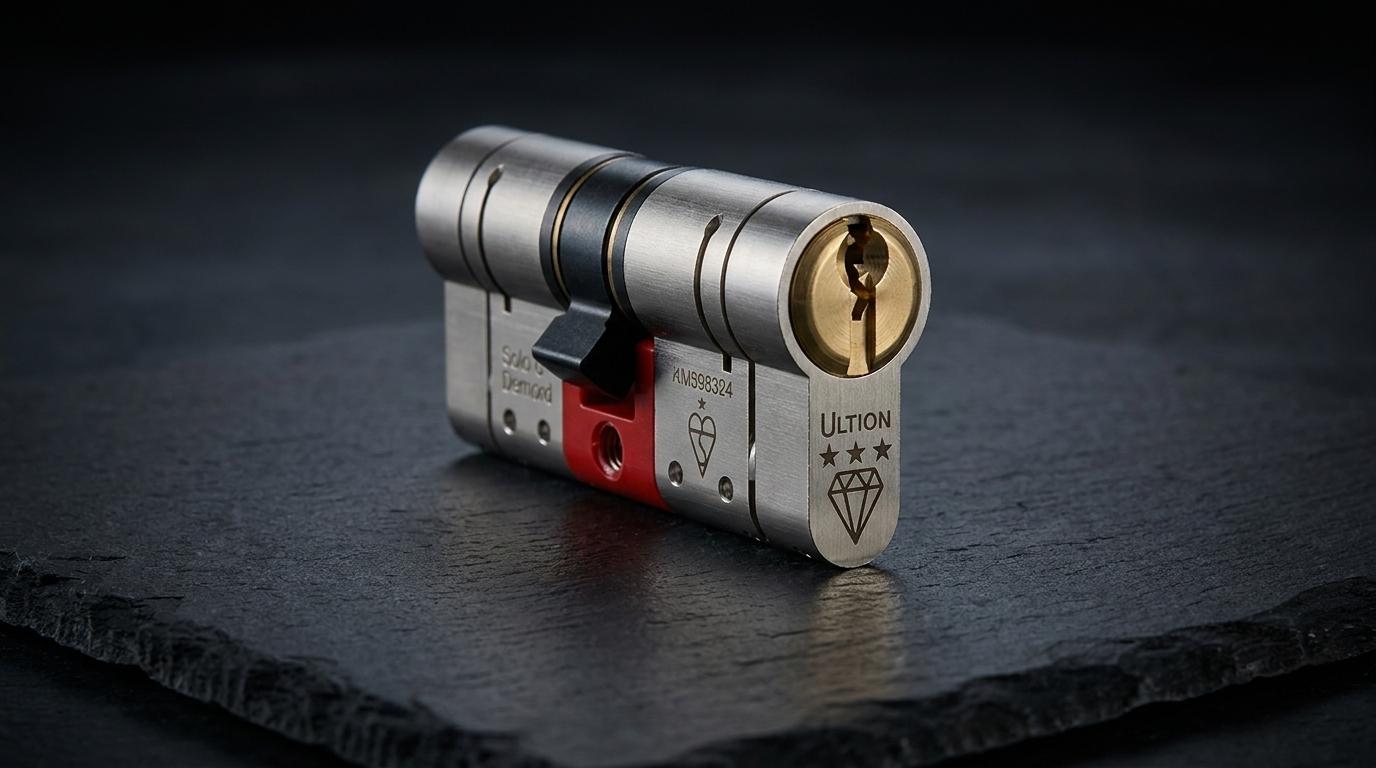
- Is there any anti-snap branding?Tested cylinders are usually marked, for example with a star rating or a maker's name like ABS Master. A blank, unbranded cylinder is a red flag.
- How old is it?If the lock came with the door and the door is more than a few years old, it predates a lot of the security improvements and is worth checking properly.
If your cylinder protrudes and carries no security marking, treat it as a standard cylinder and assume it can be snapped quickly. That is not scaremongering, it is simply how the hardware behaves.
What "good" looks like
A proper anti-snap cylinder is engineered to break in a controlled way: the outer section sacrifices itself while the core stays locked and protected, so the door does not open. The cylinder should also be sized correctly so it sits flush with the handle, leaving nothing to grip. The kitemark to look for is the 3-star (TS007) standard, or a maker like ABS Master that builds the protection in.
What I actually find on Halesowen doorsteps
When I am called out for anti snap locks in Halesowen, the picture is fairly consistent. A lot of the housing stock in and around the town, particularly the semi-detached and terraced properties built during the eighties and nineties, was fitted with uPVC doors that came with basic euro cylinders as standard. Those cylinders were never upgraded. The door itself may look solid, may have good handles and a multipoint locking mechanism, but the cylinder sitting in the middle of all that hardware is the weakest point in the whole assembly.
The second thing I see regularly is a cylinder that has been replaced at some point, but replaced with whatever was cheapest at the time rather than with a tested anti-snap product. A new cylinder is not automatically a secure cylinder. I have changed cylinders that were less than two years old because they were unbranded, overlong, and just as vulnerable as the original.
The third pattern is a cylinder that is the wrong length for the door. Builders and developers sometimes fit a standard-length cylinder regardless of door thickness, and the excess protrudes on the outside. That protrusion is not a cosmetic issue. It is a lever point. Correct sizing is part of the upgrade, not an optional extra.
What the job actually involves
A cylinder swap is not a complicated job, but it does need to be done properly. Here is what happens in practice.
- Measure the door. The cylinder length needs to match the door thickness and handle position precisely. I measure the existing cylinder before removing it and confirm the size needed. Getting this wrong means either a protrusion outside or a cylinder that sits too deep inside and is awkward to operate.
- Remove the old cylinder. One screw through the faceplate of the lock mechanism holds the cylinder in place. With that removed and the key turned slightly to release the cam, the cylinder slides out. On older doors this screw can be corroded or painted over, which adds a few minutes but is not a problem.
- Fit the new cylinder. The replacement slides in, the retaining screw goes back, and the operation is tested from both sides with the key and from inside with the thumb turn.
- Check the protrusion. With the door closed, I check the cylinder sits flush or just barely proud of the escutcheon. If the sizing is right this should be fine. I also check the key operates cleanly at both the top and bottom of the multipoint lock throw.
The whole process on a straightforward door takes well under an hour. On doors where the previous cylinder was the wrong size and the retaining screw is buried under filler or paint, it takes longer, but it is still a single visit job in almost every case.
What people often get wrong before calling
A few things I hear regularly that are worth addressing directly.
Pushing the cylinder in by hand. If the cylinder protrudes, some people try to push it inward or assume they can bodge the fit somehow. You cannot. The cylinder length is fixed. If it is the wrong size for the door, the only solution is a cylinder of the correct size.
Buying a cylinder from a hardware shop and fitting it themselves. This is not necessarily wrong in principle, but I have seen a lot of self-fitted cylinders that are the wrong length, or where the retaining screw has not been tightened properly, or where the person has bought something that looked anti-snap on the packaging but carried no recognised certification. If you are not sure what you are buying or how to measure, it is worth having it done properly.
Assuming the multipoint lock makes the cylinder irrelevant. A multipoint mechanism is a real asset and engages multiple bolts into the frame. But the cylinder is still the thing that controls all of those bolts. Snap the cylinder and the mechanism is bypassed regardless of how many locking points it has.
If you have already had a cylinder snapped or have been locked out as a result of a failed mechanism, the emergency locksmith service covers Halesowen and the surrounding area and can deal with both the immediate access problem and the security upgrade in the same visit.
What to do if you fail the test
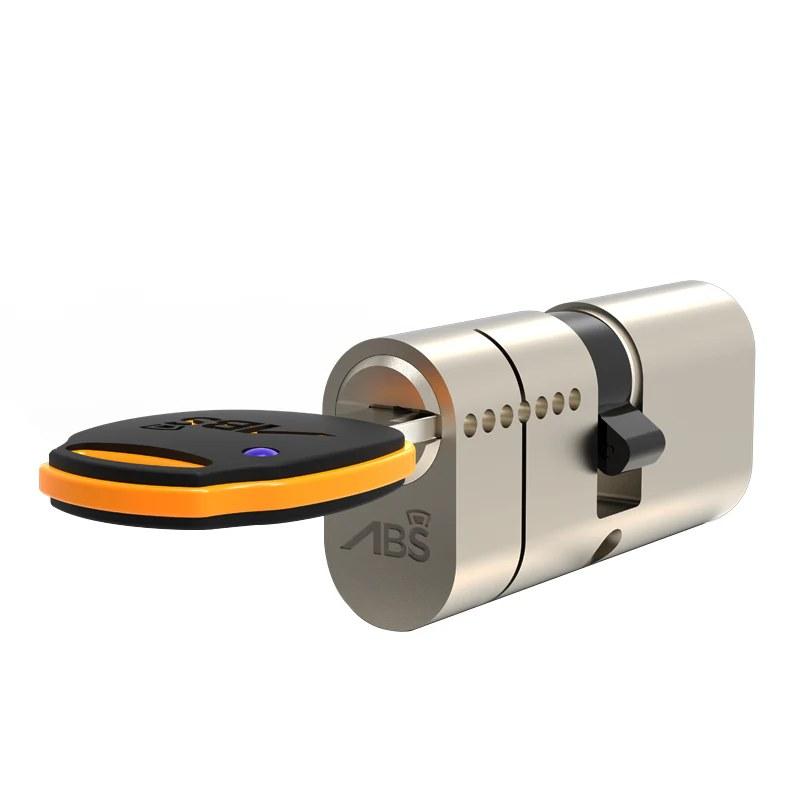
You do not need a new door or even new handles. In most cases a locksmith simply measures the door and swaps the cylinder for a high-security one, often in well under an hour. If you want the strongest option, an ABS Master anti-snap cylinder adds anti-pick, anti-drill and anti-bump protection too, and carries a manufacturer guarantee. It is one of the cheapest, highest-impact security upgrades you can make to a home.
Doctor Locks fits high-security ABS Master anti-snap cylinders across the West Midlands, including Solihull, Harborne and Stourbridge.
FAQ
How do I know if my lock is already anti-snap?
Look for branding or a star rating on the cylinder, and check whether it sits flush with the handle. A tested cylinder is usually marked. If it is blank and protrudes, assume it is a standard cylinder and have it checked.
Can I just file down or push in a cylinder that sticks out?
No. The protrusion is a symptom of a wrong-sized or low-grade cylinder. The correct fix is to fit a properly measured anti-snap cylinder, which removes the grip point and adds real snap resistance.
Is changing the cylinder a big job?
No. For most uPVC and composite doors it is a straightforward swap that keeps your existing handles and door, usually completed in well under an hour.
Do I need to replace the whole door or handle to get anti-snap protection?
No. The cylinder is a separate, removable component. In almost every case the handles, escutcheon plates and door itself stay exactly as they are. Only the cylinder is swapped. This is why it is one of the more practical security upgrades available, as it does not disturb anything else.
Does an anti-snap cylinder work with my existing keys?
No, a new cylinder comes with its own keys. Your old keys will not operate it, which is normal and expected. If you need multiple keys cut, that can be done at the same appointment. If you are a landlord managing a property change, a lock change visit covers both the security upgrade and re-keying in a single call.
Related guides and pages
Need a locksmith now?
Doctor Locks aims to reach you within the hour across Birmingham and the West Midlands. Read more about Anti-Snap Lock Upgrades.
Frequently asked questions
How do I know if my lock is already anti-snap?+
Look for branding or a star rating on the cylinder, and check whether it sits flush with the handle. A tested cylinder is usually marked. If it is blank and protrudes, assume it is a standard cylinder and have it checked.
Can I just file down or push in a cylinder that sticks out?+
No. The protrusion is a symptom of a wrong-sized or low-grade cylinder. The correct fix is to fit a properly measured anti-snap cylinder, which removes the grip point and adds real snap resistance.
Is changing the cylinder a big job?+
No. For most uPVC and composite doors it is a straightforward swap that keeps your existing handles and door, usually completed in well under an hour.
Jason has been a locksmith since 1999 and runs Doctor Locks personally, attending jobs across Birmingham and the wider West Midlands. Every article here is written from real work on real doors, not theory.