A floppy uPVC handle is usually a worn spring cassette, a failing gearbox, or loose fixing screws. It rarely fixes itself and tends to get worse. Catching it early can mean a cheap handle or spring; leaving it often ends in a snapped gearbox, which is a larger repair and sometimes a lockout.
Short answer: A floppy uPVC handle is usually a worn spring cassette, a failing gearbox, or loose fixing screws. It rarely fixes itself and tends to get worse. Catching it early can mean a cheap handle or spring; leaving it often ends in a snapped gearbox, which is a larger repair and sometimes a lockout.
A uPVC door handle that flops down, sags, or has lost its springy return is easy to ignore. The door still works, mostly, so it slips down the to-do list. The problem is that a floppy handle is almost always the first visible stage of a mechanism heading for failure, and the cost only goes one way. If you end up locked out because you put this off, you will need an emergency locksmith in Kidderminster rather than a routine repair visit, and that is a more expensive conversation to have on your own doorstep.
What is actually happening
When you lift a uPVC handle, you are driving the gearbox to throw the hooks and bolts. A small spring mechanism returns the handle to horizontal afterwards. A handle that no longer springs back has lost that support, which means one of these:
- Worn spring cassette.The spring behind the handle has failed. Sometimes a handle replacement restores the proper feel.
- A failing gearbox.If the springs in the gearbox itself are going, the handle sags and the whole mechanism is on borrowed time.
- Loose fixings.The two screws through the handle have worked loose, letting it move and wobble.
Why ignoring it costs more
Here is the chain we see again and again. The handle goes floppy, so to lock the door you start lifting harder and forcing it. That extra force is exactly what kills the gearbox. Once the gearbox snaps, you can be left unable to lock, or worse, unable to open, the door, which becomes an emergency callout on top of the repair.
A floppy handle is the cheapest this repair will ever be. It is a warning light, and the sensible move is to deal with it while it is still small.
What you can check
Look at the two screws on the handle's faceplate and tighten them gently if they are visibly loose, that alone sometimes firms up a wobble. Beyond that, resist the urge to keep forcing a sagging handle to lock. If the spring or gearbox is going, more force only hastens the failure.
How to tell which part is actually failing
This is the question most people cannot answer from the outside, and it matters because replacing the wrong part wastes money and leaves the real fault in place. Here is how I think through it on a doorstep.
Start by lifting the handle slowly and feeling what it does. If the handle lifts with normal resistance but simply drops back when you let go, the return spring in the handle rose or the spring cassette is the likely culprit. The gearbox itself is often still sound at this stage. A new handle or a new spring cassette, whichever the design takes, will usually restore a proper feel and you are done.
If the handle lifts with almost no resistance at all, or if it feels spongy and travels further than it used to before the bolts engage, the gearbox springs are involved. You may also notice that the multipoint hooks do not throw fully even when you do lift the handle. That is the gearbox telling you it is nearly finished.
A third pattern is a handle that wobbles side to side rather than sagging downward. That is almost always the fixing screws and nothing more structural. Tighten them carefully, do not over-torque, and see whether the wobble goes. If it does not, the screw holes in the door sash have widened over time and need a different approach.
The reason this diagnosis matters is that a handle replacement on a door with a dying gearbox will feel fine for a short while and then sag again, because the underlying fault was never fixed. Getting the diagnosis right in the first visit saves a second callout.
What the repair actually involves on the doorstep
When I arrive at a door in Kidderminster or anywhere else across the West Midlands, the first thing I do before touching any part is watch the door in its frame. A door that is dropping or binding in the frame puts the gearbox under constant strain, so even a new mechanism will wear faster if the door alignment is not right. Hinge adjustment or a tweak to the keeps is sometimes part of the job, not an optional extra.
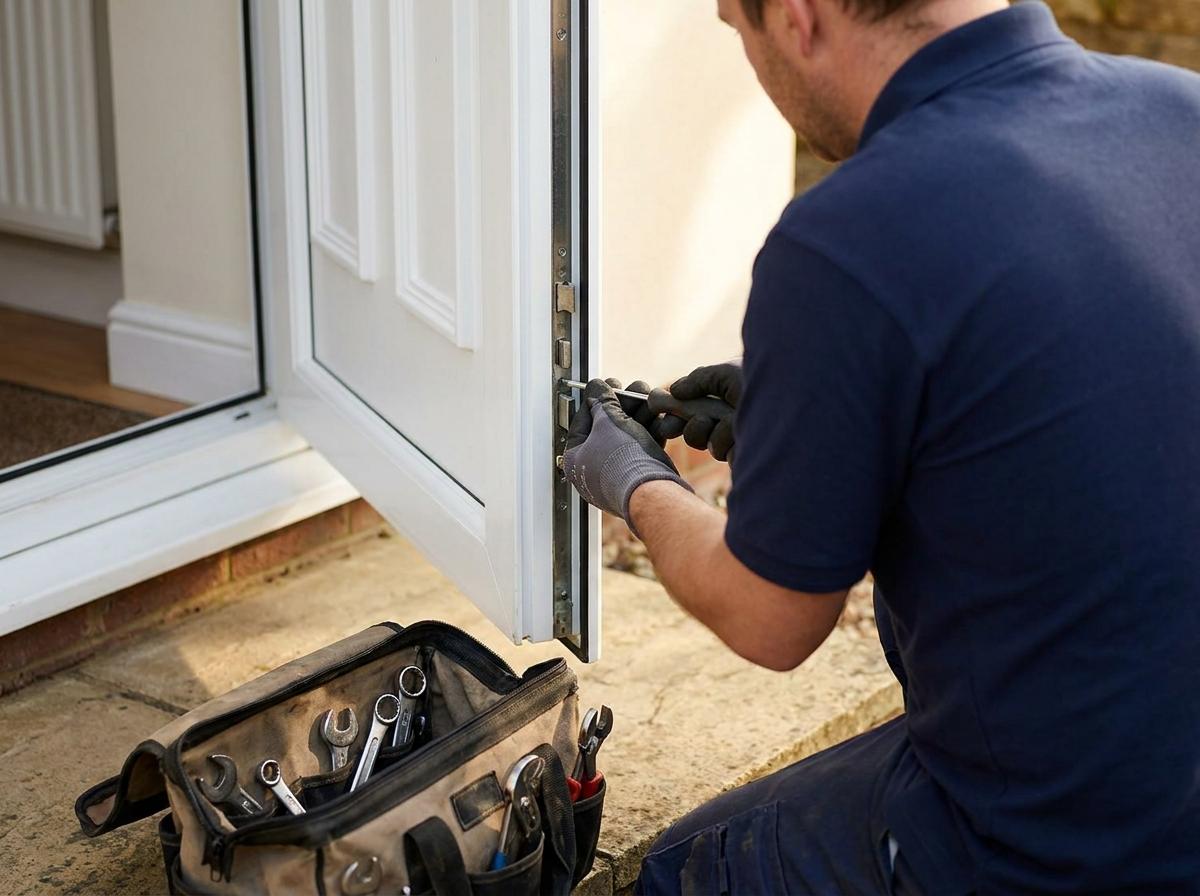
For a handle or spring cassette swap, the process is straightforward. The handle is removed, the spring or rose unit is replaced with the correct match for that make and profile, and the handle is refitted with the screws torqued properly. The door is tested through several lock and unlock cycles before I leave.
A gearbox replacement takes longer. The old mechanism has to come out of the sash, which means removing the faceplate strip along the edge of the door and sliding the gearbox clear. The replacement has to match the original in hand, backset, case size and hook pattern. Getting the wrong size means the keeps on the frame will not align, so I carry a range of the most common sizes rather than ordering and coming back. Once the new gearbox is in, the door is realigned if needed, the keeps are adjusted so the hooks enter cleanly without the door being slammed, and the whole mechanism is tested under normal operation.
What I am checking at the end is that the handle lifts with a consistent, springy resistance, that the bolts throw fully on the first lift, and that the cylinder turns without stiffness. If the cylinder is stiff or worn that is a separate issue, and sometimes worth addressing at the same visit rather than paying for a second trip later. See our uPVC door repair service for the full range of what that visit can cover.
What people get wrong when they try to manage this themselves
The most common thing I see is lubrication applied to a handle or spring that has already mechanically failed. A drop of oil on a broken spring does nothing. It may temporarily mask a squeak but the handle will be just as floppy the next morning. Lubrication is useful maintenance on a mechanism that is still sound, not a repair for one that has already gone.
The second thing is forcing the handle upward with both hands to get the door locked at night, then repeating that every day for weeks. I understand why people do it, the door needs to be locked and the handle is the only way to do it. But each forced lift is bending and stressing the gearbox cam, and when the cam finally snaps the door will not open from inside. That turns a routine repair into an emergency. If you are in Kidderminster and you find yourself in that situation, an emergency locksmith is the only option at that point, and the job is harder than a straightforward mechanism swap because the door has to be opened carefully without damaging the frame.
The third mistake is buying a cheap replacement handle from a DIY shed without measuring the backset or checking the spindle size. uPVC handles are not universal. The spindle that connects the two handle roses through the door has to be the right length for the door thickness, and the fixing centres have to match the existing holes. A handle that is even slightly wrong will either not fit or will sit proud of the rose and feel loose from day one.
FAQ
Is a floppy handle dangerous or just annoying?
It is a genuine warning sign. A handle that has lost its spring usually means the spring cassette or gearbox is failing, and forcing the door to lock can snap the gearbox, leaving you unable to lock or open it.
Can I just replace the handle myself?
If it is purely loose screws, tightening them may help. But if the spring or gearbox is the cause, a new handle alone will not last. It is worth having it diagnosed so the right part is replaced once.
How much does a uPVC handle or gearbox repair cost?
It depends on the part, but a handle or spring is modest, and even a full gearbox replacement is far cheaper than a new door. Catching it at the floppy-handle stage usually keeps it to the cheaper end.
My handle has been floppy for months and the door still locks. Does it really need attention now?
Yes, and the longer it has been going on, the more likely it is that the gearbox is already under stress. A mechanism that has been forced for months may look like it is holding on, but the internal components are often damaged in ways you cannot see from the outside. When it finally goes it tends to go without warning, and a locked-in or locked-out situation at that point is much more disruptive than a booked repair visit now.
If the gearbox snaps and I cannot open the door, what happens?
A locksmith can open the door non-destructively in most cases by manipulating or bypassing the failed mechanism. Occasionally, if the gearbox has jammed the hooks in the extended position, more access is needed, but an experienced locksmith will always try the least invasive method first. If you are in Kidderminster or the surrounding area and this happens, an emergency locksmith callout is the right call rather than attempting to force the door yourself, which risks damaging the frame and the sash.
The fix
A locksmith identifies whether it is the handle, the spring cassette or the gearbox, and replaces the right part, usually in one visit. If the gearbox is involved it is replaced as a unit, and the door is realigned so the new mechanism is not under strain. Read the wider picture in our guide to why a uPVC door will not lock, or see our uPVC door repair service.
Doctor Locks fixes loose and failing uPVC handles across the West Midlands, including Shirley, Stourbridge and Kidderminster.
Related guides and pages
Need a locksmith now?
Doctor Locks aims to reach you within the hour across Birmingham and the West Midlands. Read more about uPVC Door Lock Repairs.
Frequently asked questions
Is a floppy handle dangerous or just annoying?+
It is a genuine warning sign. A handle that has lost its spring usually means the spring cassette or gearbox is failing, and forcing the door to lock can snap the gearbox, leaving you unable to lock or open it.
Can I just replace the handle myself?+
If it is purely loose screws, tightening them may help. But if the spring or gearbox is the cause, a new handle alone will not last. It is worth having it diagnosed so the right part is replaced once.
How much does a uPVC handle or gearbox repair cost?+
It depends on the part, but a handle or spring is modest, and even a full gearbox replacement is far cheaper than a new door. Catching it at the floppy-handle stage usually keeps it to the cheaper end.
Jason has been a locksmith since 1999 and runs Doctor Locks personally, attending jobs across Birmingham and the wider West Midlands. Every article here is written from real work on real doors, not theory.